
“Canada must move from apology to action.”
Justice Sinclair
What is the Truth and Reconciliation Commission of Canada?
The Truth and Reconciliation Commission (TRC) was established in 2008 as part of the Indian Residential Schools Settlement Agreement (IRSSA), the largest class action settlement in Canadian history. It was an attempt to recognize the trauma of Indigenous people by guiding Canadians through the difficult discovery of the truths behind the residential school system and their lasting effects on the victims. It was also an means of compensating them for the horrors they experienced. By forming the TRC, a foundation was being built in which lasting reconciliation across Canada can occur.
Schedule N
Schedule N was the Truth and Reconciliation Commission’s official operating mandate. It was divided into 14 sections and outlines a comprehensive set of goals, activities and requirements which the TRC was to follow. These included (but are not limited to):
- Hosting seven national events across Canada
- Issuing a final report
- Establishing a National Research Centre
- Collecting all relevant documents from church and government entities
- Overseeing and approving a $20 million commemoration fund
- Hosting community events
- Establishing regional liaisons
- Gather statements and share truths
- Have an active research agenda
They were given a five year time frame and a $60 million budget in order for the commission to fulfill its mandate. This was a process which proved to be incredibly challenging as Justice Harry Laforne resigned from his position as chair of the TRC just six months after his appointment due to conflict with other commissioners, what he deemed “insurmountable challenges” and government interference. Three months later saw the resignation of the remaining two positions, leaving the TRC without any leadership.
In June of 2009 all three vacant positions on the commission were filled and were not left with the difficulty task of re-establishing the commission and gaining the trust of Indigenous people back. To do this, the TRC was moved from Ottawa to Winnipeg which ensured a more independent commissions that was located closer to populations of survivors.
In June of 2010 the TRC took one of its first concrete steps towards fulfilling its missions by hosting a national event at The Forks National Historic Site in Winnipeg. It was a four day event which saw thousands of attendees listening to the experiences of survivors at sharing circles, a powwow celebration and a concert held by prominent Canadian musicians such as Blue Rodeo and Bufft Sainte-Marie. This also helped to establish a framework for future events which featured a lighting of a sacred fire, a four day format and gathering each day to offer survivors the opportunity to share their experiences with the commission in public and in private. The TRC went on to fulfill their national event mandate with one being held in Inuvik, North West territories in June 2011, one held in Halifax and one in Sakatoon in 2012, one in Montreal and one in Vancouver in 2013 and the final event held in Edmonton in 2014.
The Truth and Reconciliation accomplishments
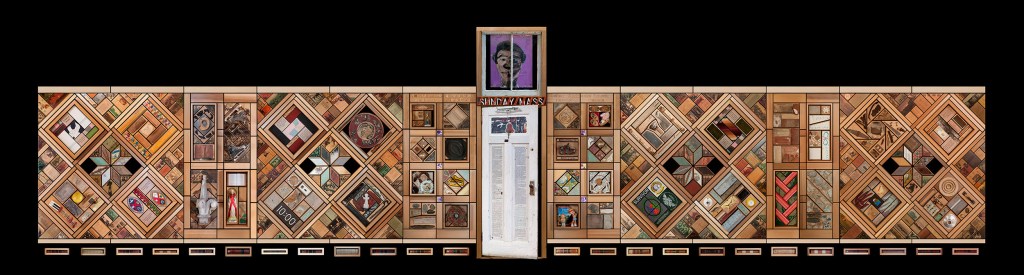
The TRC experienced several staffing issued throughout its existence beyond what was previously mentioned, and found themselves in court on five separate occasions in an attempt to fulfill their mandate by collecting documents from governmental and religious entities who would not willingly release documents. In the years between 2008-2014 the TRC conducted community hearings all across the country, visited over 70 communities to attend formal hearings, and participated in various other community events and public outreach activities. They oversaw the disbursement of two funding packages which together totaled over $20 million. The funds were allocated to create a range of commemorative events and projects such as permanent community markers recognizing the atrocities committed against Indigenous people, and art projects such as Carey Newman’s Witness Blanket and the Winnipeg Ballet’s Going Home Star.
National Centre for Truth and Reconciliation
The National Centre for Truth and Reconciliation was created as a result of the ending of the Truth and Reconciliation Commission. It was awarded to the University of Manitoba and is recognized as the official home to all documentation collected by the TRC, including over 7000 statements and 5 million records.
For more information regarding the National Centre for Truth and Reconciliation or to search their records please visit: https://nctr.ca/map.php
The final report
The official closing of the Truth and Reconciliation took place in Ottawa in June of 2015. At the ceremony they presented four summary reports from all the records and testimonies they gathered, with one only recounting the voices of survivors. The final version was released on December 15, 2015. In total, the report lists 94 recommendations for reconciliation.
The report titled “Honouring the Truth, Reconciling for the Future” documented the experiences of over 150,000 Indigenous individuals who survived the Canadian Residential School system. Many of them detailed experiences of physical and sexual abuse as children. It also recounts the horrible living conditions many endured with at least 3,200 children dying from being malnourished, contracting tuberculosis or other reasons related to their living conditions. It should be noted that this estimate is a generous low number. Due to poor record keeping practices and burial reports an accurate number cannot be identified, but it is estimated that the actual mortality rate could be anywhere from 5-10 times higher*.
Where does that leave us?
So with the conclusion of the Truth and Reconciliation Commission and establishment of the National Centre for Truth and Reconciliation, where does that leave us now with recognizing the legal and human injustices Indigenous people have historical endured, and continue to face today? With Justin Trudeau attending the official report release in Ottawa, he agreed to pursue all recommendations detailed in the report and is currently working toward one which addresses the need for a national inquiry into missing and murdered Indigenous women and girls.
There has not been much movement on the other 93 recommendations, including improving Aboriginal access to education, (specifically post-secondary schooling), reducing the number of Indigenous children in the foster care system or increasing funding for Aboriginal programming on CBC/Radio Canada. These are all issues which would require financial backing and in order to see the suggestions outlined by the TRC fully realized, Canada would need a government which is fully committed to embracing change by actively supporting it on more than just a symbolic level. As Justice Sinclair has stated: “Canada must more from apology to action.”
Bibliography
Home | NCTR. (n.d.). Retrieved from https://nctr.ca/map.php
Moran, R., Truth and Reconciliation Commission (2019). In The Canadian Encyclopedia. Retrieved from https://thecanadianencyclopedia.ca/en/article/truth-and-reconciliation-commission
 Indigenous Law