
What is a Treaty?
Treaties are agreements made between the Government of Canada, Indigenous groups and often provinces and territories that define ongoing rights and obligations
Honoring the treaty relationship provides a framework for living together and sharing the land Indigenous peoples traditionally occupied
These agreements provide the foundation for ongoing co-operation and partnership as we move forward together to advance reconciliation
A Quick History
Starting in 1701, the British colonies of North America began establishing treaties with Indigenous groups to support peaceful economic and military relations. Colonial and paternalistic policies that would eventually erode these early relationships
Over the next two hundred years, the English Crown signed treaties that defined the respective rights of Indigenous peoples and European newcomers to use the North American lands that Indigenous peoples traditionally occupied
Historic treaties signed after 1763 provided large areas of land, occupied by First Nations, to the Crown in exchange for reserve lands and other benefits. At this time, the treaty-making process was formally established via the Royal Proclamation of 1763
Historic Treaties
The Government of Canada recognizes 70 historic treaties in Canada signed between 1701 and 1923
As European colonies pushed further inland, their competition for control of the Interior of North America transformed their respective commercial partnerships with First Nations into vital military alliances that brought much needed support to both camps
By the mid 18th century, both France and Great Britain had established a complex system of alliances with different and competing Aboriginal groups
Following the Seven Years War, treaties promised that Indigenous groups would have free movement throughout their traditional territories without fear of British troops; former French allies would maintain their privileges; and lands, both villages and hunting territories, would be maintained
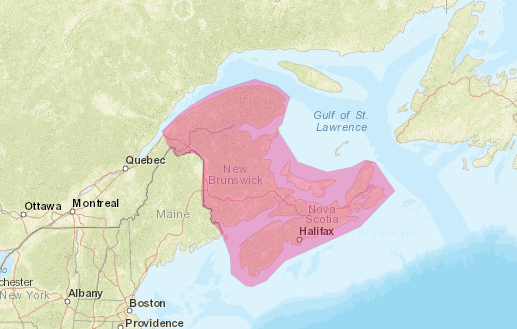
Britain signed a series of treaties with various Mi’kmaq, Wolastoqiyik (Maliseet), Abenaki, Penobscot and Passamaquoddy peoples living in parts of what are now the Maritimes and Gaspé region in Canada and the northeastern United States
Commonly known as the Peace and Friendship Treaties, these agreements were chiefly designed to prevent war between enemies and to facilitate trade
While these treaties contained no monetary or land transfer provisions, they guaranteed hunting, fishing and land-use rights for the descendants of the Indigenous signatories
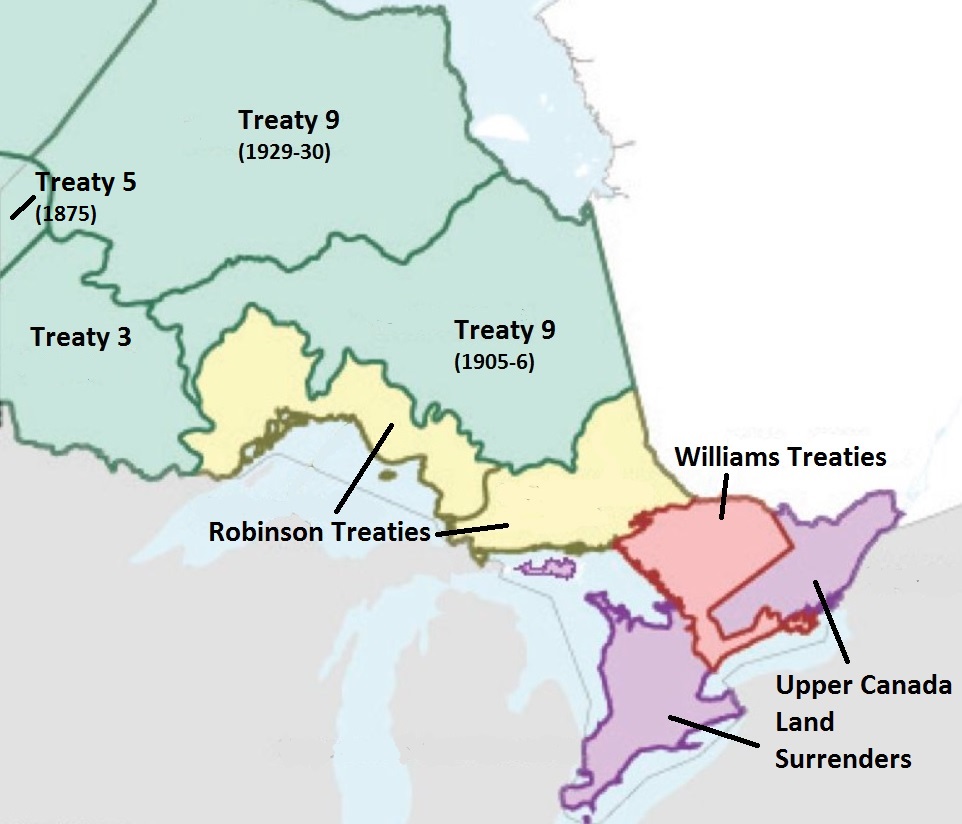
Following the war of 1812, European immigrants came in large numbers to Upper Canada and Aboriginal peoples began to lose the influence over the British. The pace of land surrenders increased to provide settlers with land for farming
The treaties conducted between 1815 and 1860 covered all the remaining lands of Upper Canada, from the productive agricultural lands south of Lake Huron to the resource-rich lands around Lake Superior and Georgian Bay
The Williams Treaties were signed in October and November 1923 by the governments of Canada and Ontario and by seven First Nations of the Chippewa of Lake Simcoe and the Mississauga of the north shore of Lake Ontario
While Chippewa and Mississauga peoples argue that the Williams Treaties also guaranteed their right to hunt and fish on the territory, the federal and provincial governments have interpreted the treaty differently, resulting in legal disputes and ongoing negotiations about land rights
The Abishnawbe of the Great Upper Lakes had serious concerns with British mining practices, as they firmly believed the colony had no rights to the lands. This led to violent clashes in 1849 and motivated William Robinson to negotiate a treaty
Treaties were negotiated with the Lake Superior and the Lake Huron nations for a one-time payment of £2,000 and a £500 / £600 annum. Aboriginal peoples retain hunting and fishing rights until settlement began and reserves are set aside. These treaties were the first to bundle elements of payment and subsistence rights, and became the model for subsequent treaties in the post-Confederate period
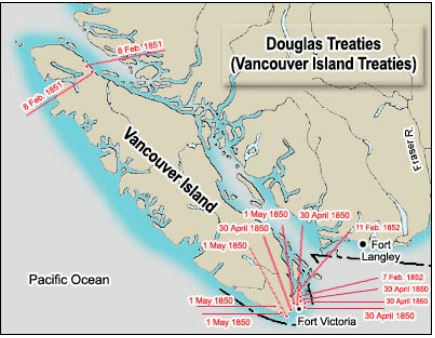
In the 1840’s, The Hudson’s Bay company established a trading post at Fort Victoria in the territory of the Lekwungen Coast Salish-speaking people. In order to maintain it’s hold on the territory and trade routes, the British created a colony on Vancouver Island and gave The Hudson’s Bay Company exclusive trading rights. In return, the island was to be colonized by British Settlers and the negotiations to purchase the land become known as the Douglas Treaties
Between 1850 and 1854, James Douglas signed 14 treaties with Aboriginal communities on Vancouver Island. Overall, the treaty text is quite short and the agreements are almost identical, with communities surrendering their land for blankets or pounds sterling. These treaties are fraught with misunderstandings as few representatives spoke the Salish language and few Indigenous people spoke English

The Numbered Treaties are a series of 11 treaties made between the British Crown and First Nations from 1871 to 1921. The Numbered Treaties cover the area between the Lake of the Woods (northern Ontario, southern Manitoba) to the Rocky Mountains (northeastern British Colombia and interior Plains of Alberta) to the Beaufort Sea (north of the Yukon the Northwest Territories)
In exchange for Indigenous territory, the British promised special rights to treaty lands, cash payments, hunting and fishing tools, and agricultural equipment. The British intended to use the land for industrial development and White settlement. Overall, the terms of agreement are controversial and still contested in the courts today
Bibliography
Branch, G. of C. I. and N. A. C. C. (2008, November 3). Treaties and agreements [Administrative page]. Retrieved December 15, 2019, from https://www.rcaanc-cirnac.gc.ca/eng/1100100028574/1529354437231#chp3
Canada, G. of C. I. and N. A. (2013a, February 14). Treaties of Peace and Neutrality (1701-1760) [Reference material]. Retrieved December 15, 2019, from https://www.rcaanc-cirnac.gc.ca/eng/1360866174787/1544619566736
Canada, G. of C. I. and N. A. (2013b, February 15). Peace and Friendship Treaties (1725-1779) [Reference material]. Retrieved December 15, 2019, from https://www.rcaanc-cirnac.gc.ca/eng/1360937048903/1544619681681
Canada, G. of C. I. and N. A. (2013c, February 15). Robinson Treaties and Douglas Treaties (1850-1854) [Reference material]. Retrieved December 15, 2019, from https://www.rcaanc-cirnac.gc.ca/eng/1360945974712/1544619909155#rt
Canada, G. of C. I. and N. A. (2013d, February 15). The Numbered Treaties (1871-1921) [Reference material]. Retrieved December 15, 2019, from https://www.rcaanc-cirnac.gc.ca/eng/1360948213124/1544620003549
Canada, G. of C. I. and N. A. (2013e, February 15). Upper Canada Land Surrenders and the Williams Treaties (1764-1862/1923) [Reference material]. Retrieved December 15, 2019, from https://www.rcaanc-cirnac.gc.ca/eng/1360941656761/1544619778887#uc
 Indigenous Law